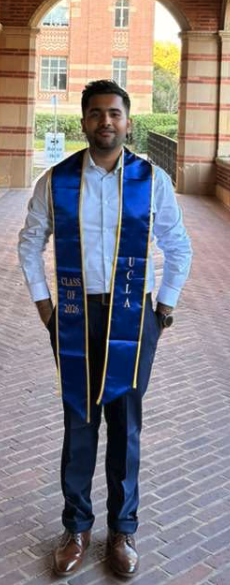
Debajyoti Chakrabarti

Second-Year PhD Student in Aerospace Engineering, UCLA

Robotics and Control · PRACTICE Lab · Advised by Prof. Anushri Dixit

Safe autonomy—from learning-enabled robots to deep-space missions.

I am a second-year PhD student in Aerospace Engineering at UCLA, advised by Prof. Anushri Dixit in the PRACTICE (Probabilistic Robotics and Control Theory in Complex Environments) Lab. My research focuses on safe and reliable autonomous systems at the intersection of reinforcement learning, motion planning, optimal control, and multi-agent decision making.

Before UCLA, I worked as a Guidance, Navigation, and Control scientist at the Indian Space Research Organisation (ISRO), where I developed autonomy and control algorithms for various interplanetary and geostationary spacecraft missions including Chandrayaan-3 Moon landing (first soft landing near lunar south pole), Gaganyaan (India’s human spaceflight program), and Aditya-L1 (solar observatory mission to study the Sun, placed in halo orbit around Earth-Sun Lagrangian-1 point).

Education

Ph.D. in Aerospace Engineering — Robotics and Control
2024–Present
M.S. in Aerospace Engineering
2026
B.Tech. in Electronics and Communication Engineering (Avionics)
2019

Current Research

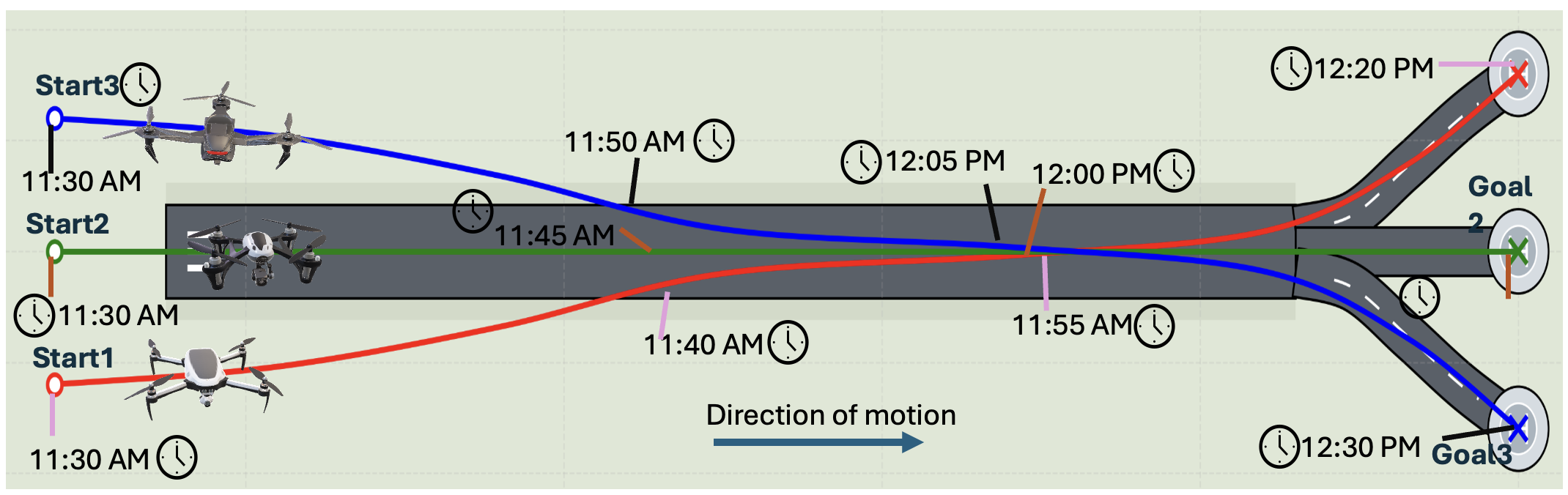
Overview of the incentive-aware airspace allocation framework for multi-agent collision avoidance

Paying for Space: Incentive-Aware Motion Planning for Multi-Agent Collision Avoidance

IEEE CDC 2026 · Accepted
Multi-Agent Systems Motion Planning Optimal Control Mechanism Design

Developed an incentive-aware multi-agent motion planning framework for agents with heterogeneous private preferences.

The method combines bilevel optimization, convex safe-corridor allocation, decentralized trajectory execution, and VCG-inspired transfers to coordinate collision-free motion under strategic agent behavior.
World-Model Reinforcement Learning for Quadruped Robot Soccer

Ongoing
World Models Risk-Sensitive RL Self-Play Quadruped Robotics

Developing a quadruped soccer framework with high-level R2-Dreamer control, a low-level locomotion policy trained separately with domain randomization, and iterative self-play.

The main research direction investigates risk-sensitive world-model learning: whether lower-tail outcomes predicted in latent imagination can reliably reduce poor closed-loop behaviors such as falls, collisions, and timeouts.

Highlights: R2-Dreamer · CVaR risk-sensitive learning · iterative self-play · failure-aware world models

Selected Robotics & Learning Projects

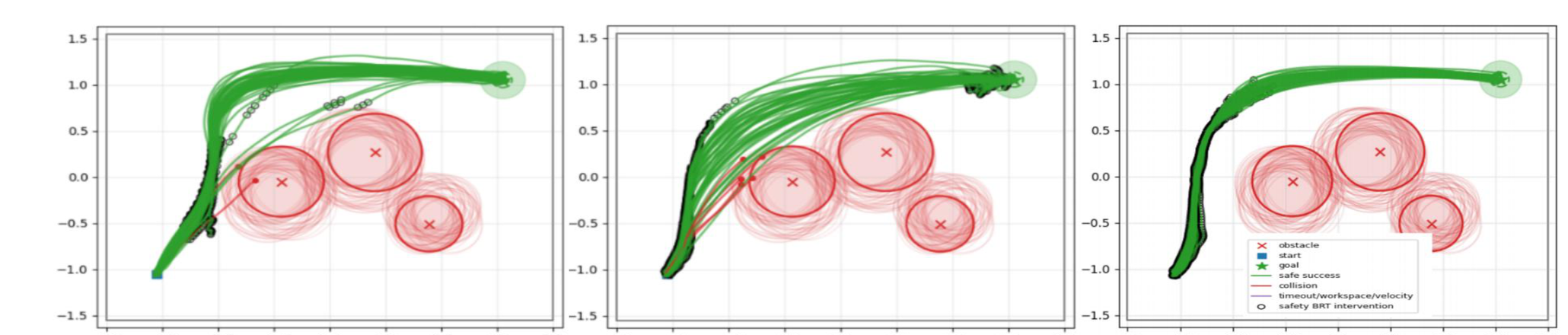
Comparison of low-disturbance BRT, switching BRT, and hierarchical BRT safety-shielding trajectories

Adaptive Safety Shielding for Goal-Directed Navigation under Exogenous Disturbance

ECE M237A Course Research Project · Spring 2026

Safe RL Hamilton-Jacobi Reachability PPO Safety Filters

Combined a nominal PPO navigation policy with offline Hamilton-Jacobi reachability certificates and online disturbance estimation to adapt the safety shield during deployment.

Under shifted obstacles and time-varying disturbance, vanilla PPO achieved 58% success / 42% collision, while hierarchical adaptive shielding achieved 100% success / 0% collision.

Vanilla PPO58% success / 42% collision
Adaptive shielding100% success / 0% collision
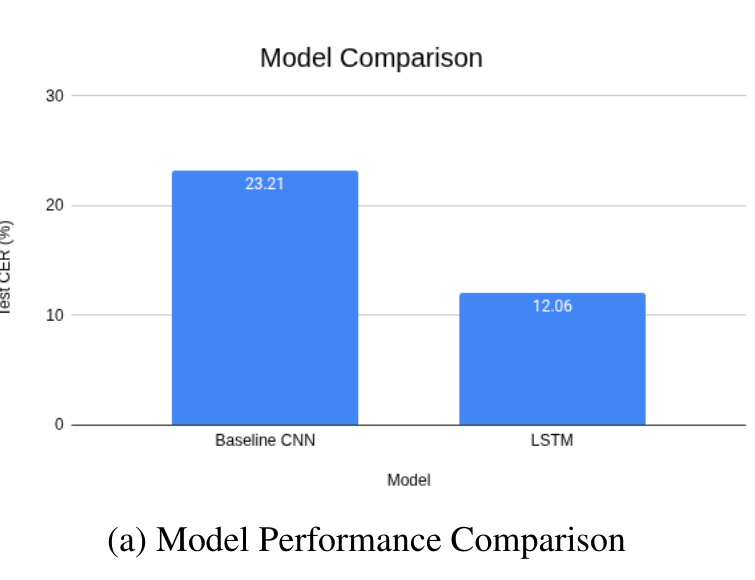
Bar chart comparing test character error rate: 23.21% for the CNN baseline versus 12.06% for the LSTM model

Predicting Keystrokes from Electromyography Signals

ECE C247A Course Research Project · Winter 2026

PyTorch LSTM Transformers CTC

Developed sequence models for EMG-to-keystroke decoding using LSTMs, Transformer-based architectures, and CTC training.

The best LSTM model reduced test character error rate from 23.21% for the CNN baseline to 12.06%, with additional studies on training-data scale, electrode count, augmentation, and sampling frequency.

CNN baseline23.21% CER
LSTM12.06% CER
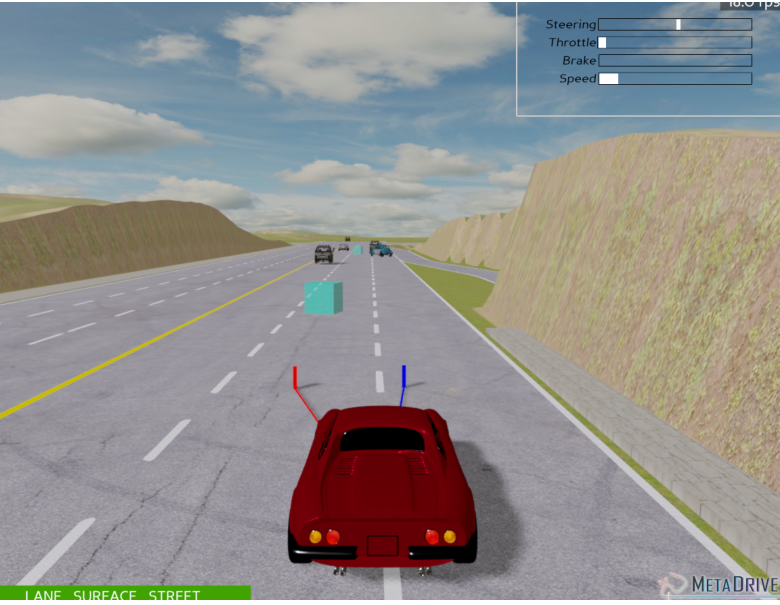
Expert (red) and learner (blue) trajectory rollouts overlaid on the ego-view before VLM evaluation

VLM-Augmented Policy Switching for Safe Driving (VLAPS)

CS 269 Course Research Project · Fall 2025

Vision-Language Models Imitation Learning TD Learning Motion Planning

Developed a VLM-gated policy-switching framework in which an RRT* + PD expert and a learned driving policy propose candidate trajectories, and a vision-language model decides which controller to trust.

The VLM preference is also used for behavior cloning and TD-style policy learning, enabling fully autonomous training without human intervention.

Final evaluation86% success, 0% crashes (50 episodes)
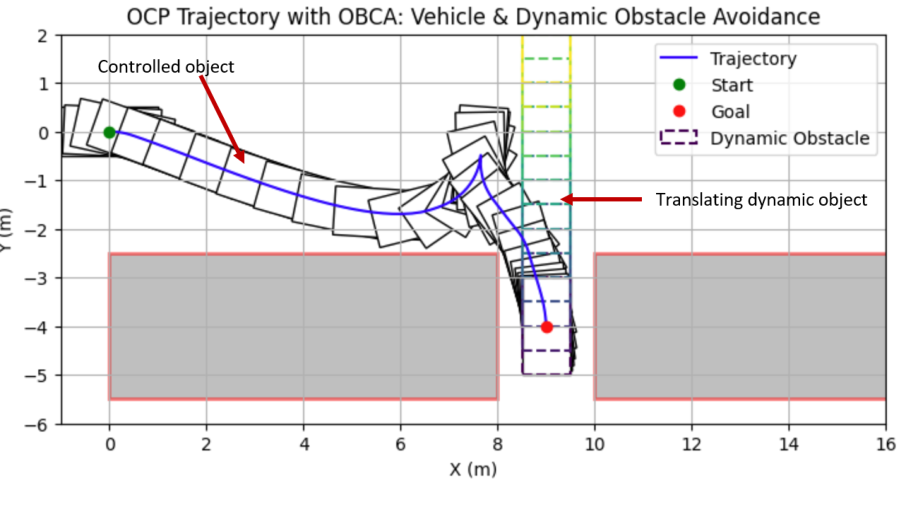
Optimization-based vehicle trajectory navigating around a translating obstacle into a reverse-parking space

Optimization-Based Collision Avoidance (OBCA)

MAE 271D Course Research Project · Spring 2025

Optimal Control (OCP) Model Predictive Control Collision Avoidance Autonomous Parking

Implemented smooth, exact collision-avoidance constraints for full-dimensional vehicles in one-shot optimal control and receding-horizon MPC.

Extended the formulation to translating and rotating obstacles, and compared strict collision-free trajectories with minimum-penetration solutions in tight parking environments.

ControllersOne-shot OCP + MPC
ObstaclesStatic + dynamic

Spacecraft Autonomy & GNC at ISRO

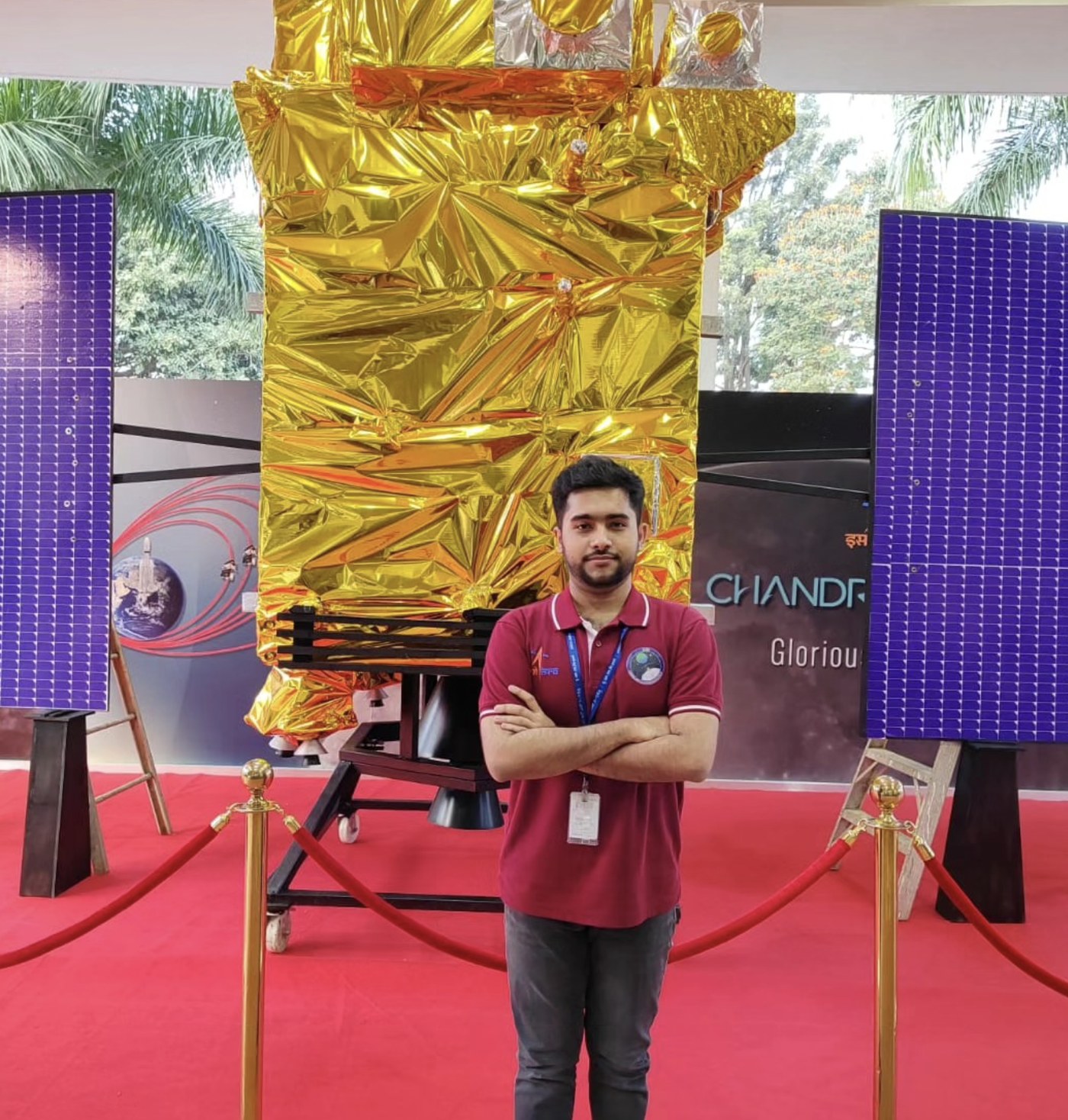
Debajyoti Chakrabarti standing in front of a Chandrayaan-3 lander display at ISRO

Guidance, Navigation & Control Scientist

U R Rao Satellite Centre, ISRO · 2019–2024

Powered Descent Spacecraft Control Flight Algorithms Mission Analysis

Worked for five years on spacecraft guidance, navigation, control, dynamics, and mission-analysis problems across more than ten space missions, including Chandrayaan-3, Aditya-L1, Gaganyaan, and INS-2B.

Within this portfolio, my contributions to Chandrayaan-3 included powered-descent GNC, onboard guidance-feasibility and retargeting methods, high-fidelity simulation, and control-stability analysis with propellant slosh dynamics.

Experience5 years
Mission portfolio10+ missions

Undergraduate Research

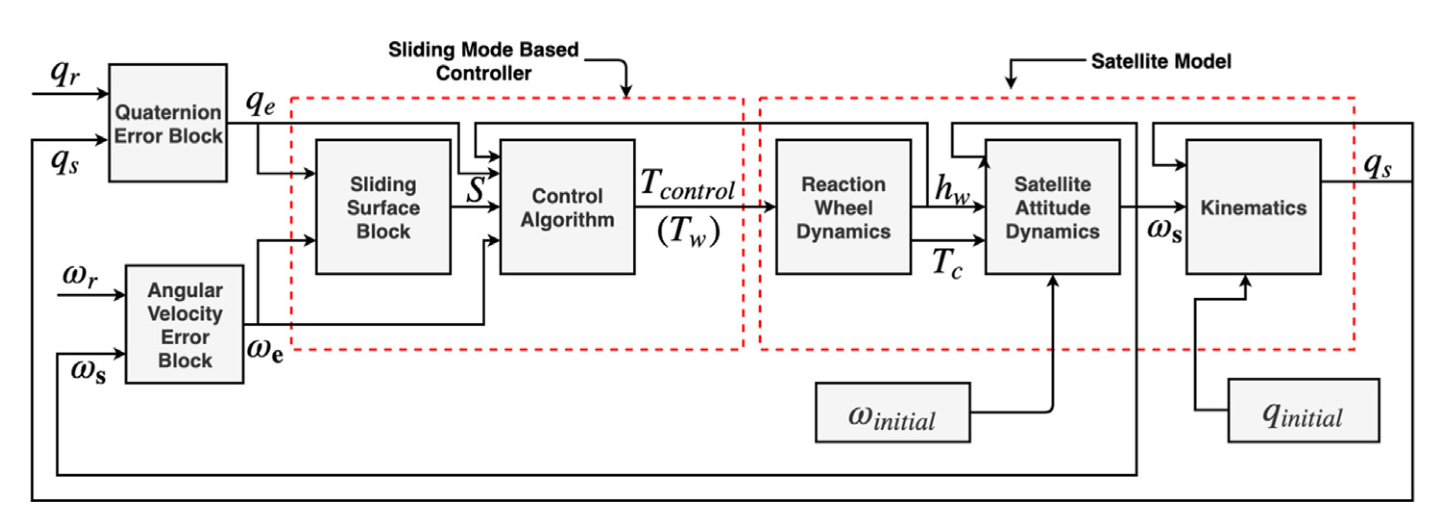
Published block diagram of the sliding-mode satellite attitude-control system

Advanced Control Algorithms for Satellite Attitude Maneuver

B.Tech Final-Year Thesis · IIST · 2019

Spacecraft GNC Nonlinear Control Sliding Mode Control Fractional-Order Control

Developed nonlinear and fractional-order sliding-mode controllers for reaction-wheel-actuated satellite attitude maneuvering, including controller tuning, finite-time convergence analysis, and Lyapunov-based stability analysis.

Evaluated disturbance rejection and robustness to spacecraft inertia uncertainty; the thesis later resulted in a publication in Advances in Space Research.

Published in Advances in Space Research · 2020

Selected Publications

Journal

  1. Suraj Kumar*, Debajyoti Chakrabarti*, Aditya Rallapalli, Bharat K. G V P. “Real-Time Retargeting Based Robust Polynomial Guidance for Chandrayaan-3 Lunar Landing Mission.” Journal of Guidance, Control, and Dynamics, 2026. [link]
  2. Debajyoti Chakrabarti, N. Selvaganesan. “PD and PDβ Based Sliding Mode Control Algorithms with Modified Reaching Law for Satellite Attitude Maneuver.” Advances in Space Research, 2020. [link]

Conference

  1. Debajyoti Chakrabarti, Anushri Dixit. “Paying for Space: Incentive-Aware Motion Planning for Multi-Agent Collision Avoidance.” IEEE Conference on Decision and Control (CDC), 2026. (Accepted). [link]
  2. Suraj Kumar*, Debajyoti Chakrabarti*, Aditya Rallapalli. “Real-Time Retargeting Using Controllability Boundary for Chandrayaan-3 Lunar Landing.” American Control Conference (ACC), 2026. [link]
  3. Suraj Kumar, Aditya Rallapalli, Debajyoti Chakrabarti, Rijesh M P, Bharat K. G V P. “Powered Descent Trajectory Design and Guidance Algorithms for Chandrayaan-3 Lunar Landing Mission.” AIAA SciTech 2026 Forum, 2026. [link]
  4. Debajyoti Chakrabarti, Suraj Kumar, Aditya Rallapalli, MP Rijesh, Bharat K. G V P. “Convex Decision Boundary Design for Guidance Feasibility Check During Powered Descent Phase of Chandrayaan-3 Lander.” IFAC-PapersOnLine, 2024. [link]
  5. Aditya Rallapalli, Debajyoti Chakrabarti, Nivriti Priyadarshini, MP Rijesh, Bharat K. G V P. “Stability Analysis Using Describing Function for Non-Linear Attitude Control Loop with Slosh Dynamics of Chandrayaan-3 Landing Mission.” IEEE Indian Control Conference, 2024. [link]

* Equal contribution

Full publication list → Google Scholar

Services & Teaching

Peer Reviewer

Teaching Assistant

Selected Honors